
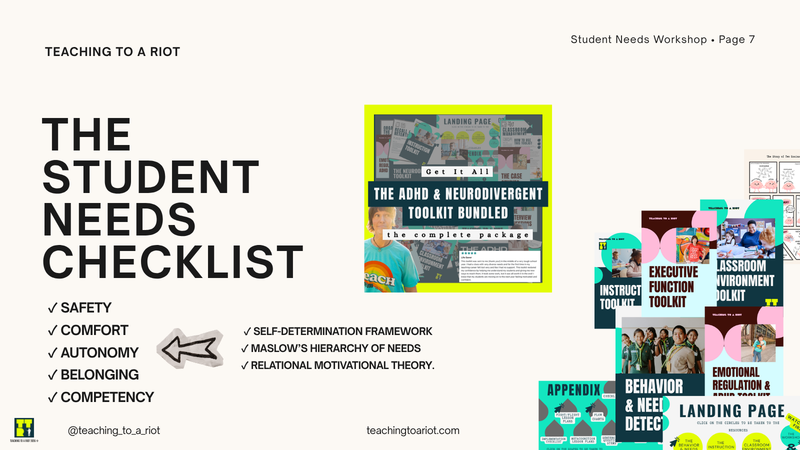
The Student Needs Workshop
I walk you through the whole process, then work a real case study all the way through so you can see it done before you try it. It runs about an hour.
Student centered, psychologically influenced, and brain based methods to increase collaboration, engagement,...

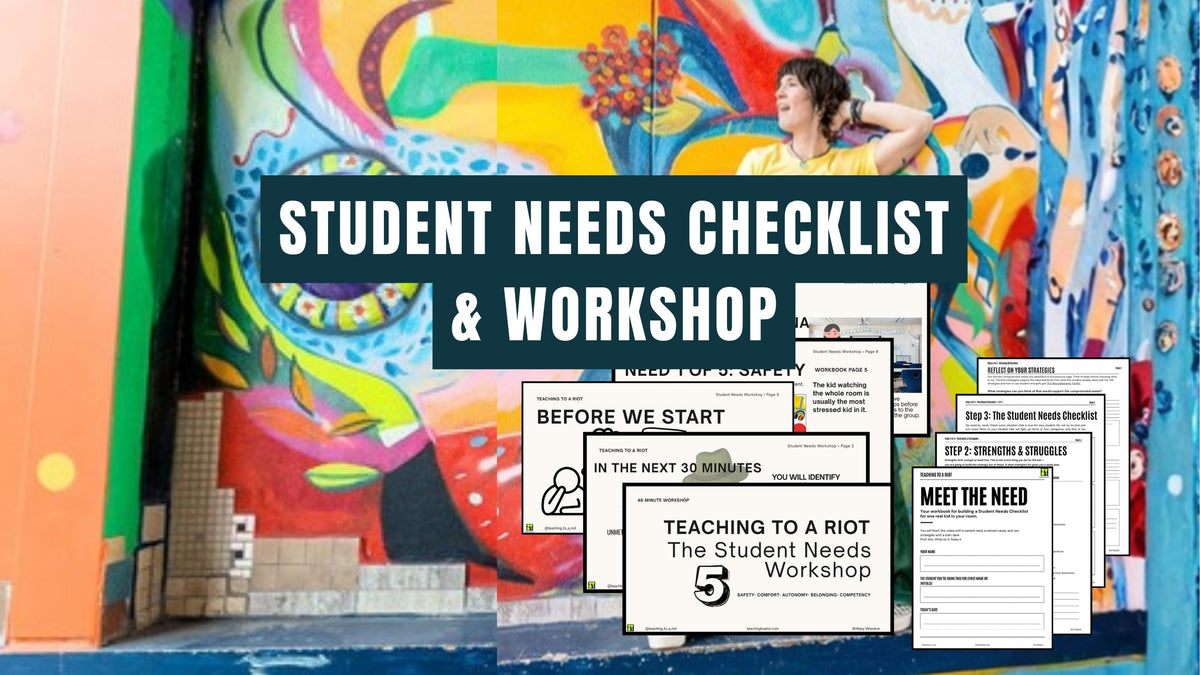
FREE STUDENT NEEDS CHECKLIST + 1-HOUR WORKSHOP
Felt safety comes from 5 needs: safety, comfort, autonomy, belonging, and competency.
Here for the Student Needs Checklist? You are in the right place. It comes with the free Student Needs Workshop.
The seat change. The fidget. The breaks. The sticker chart.
Each one worked for a while. Then the behavior came back.
Before you say the student is not trying, I want you to repeat after me and say it with your chest. It is not you. It is not the kid.
When I started working as a behavioral teacher, I tried it all. The problem was, I was choosing strategies on a hunch and on what I saw in the moment, while I was doing 101 other things. I was choosing tools for problems I didn't understand, and I was killing myself slowly over it.
The Student Needs Workshop + Checklist is how you name it.
Many of today's extreme behaviors come from neurodivergent students whose needs are compromised in the classroom.
When I say neurodivergent I mean:
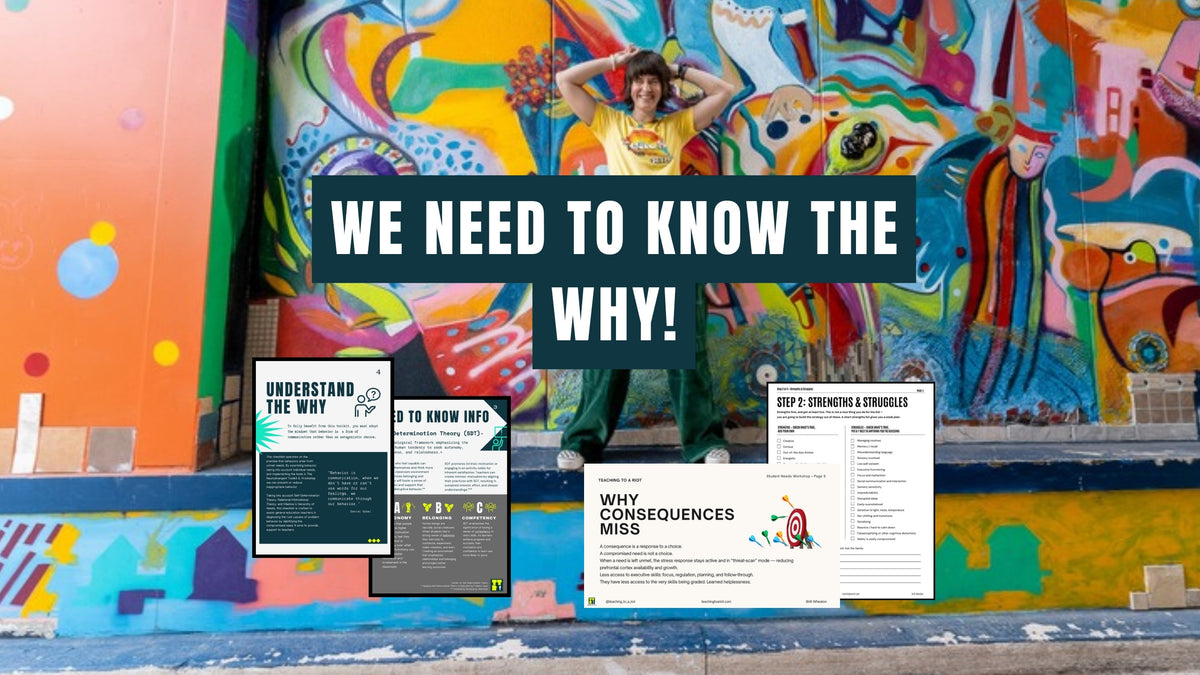
Felt safety comes from 5 needs: safety, comfort, autonomy, belonging, and competency. These 5 needs are often compromised for neurodivergent students in general education settings. When these needs are compromised over and over again, the student's threat response becomes overreactive, and the behavior becomes MALADAPTIVE.
Big threat response behaviors that look like fight/flight.
Seeking constant affirmation or connection.
Seeking control.
These behaviors are threat responses. That means they protect the student in the moment but cause problems over time.
Identify the root of the behavior and prevent the behavior before it occurs.
Pick one student. Press play. Fill in the workbook while I teach. I build in time for you to write and reflect.
By the end of the Student Needs Workshop, you will have:
This works even if:
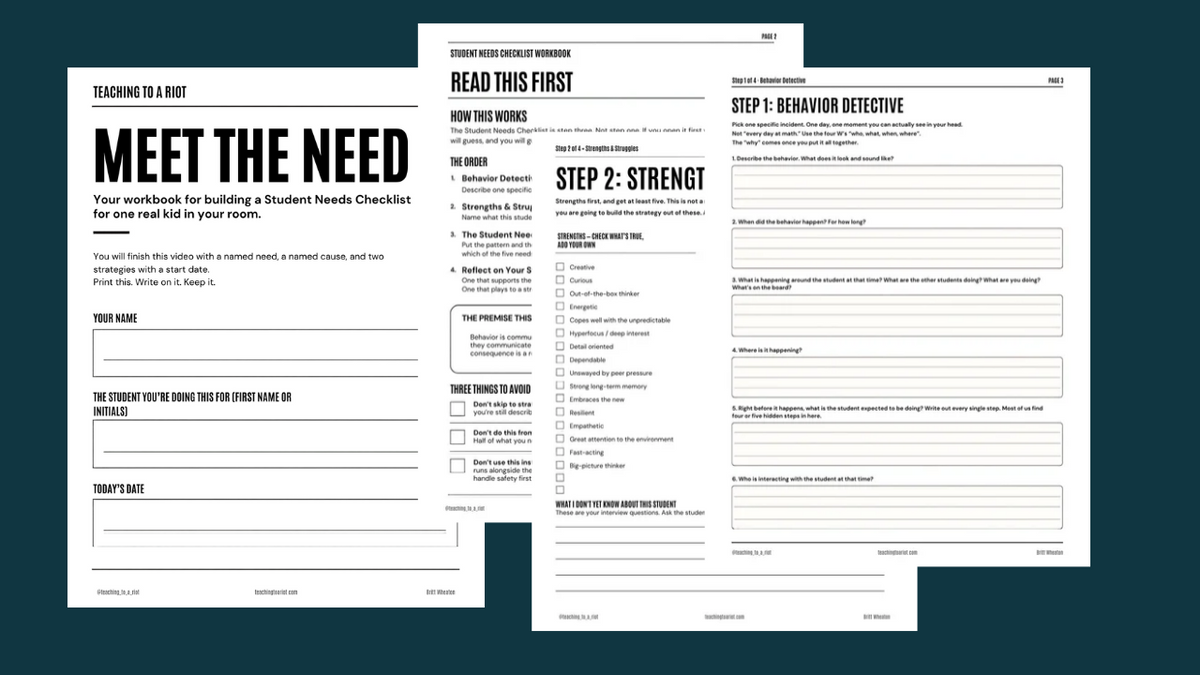
I walk you through the whole process, then work a real case study all the way through so you can see it done before you try it. It runs about an hour.
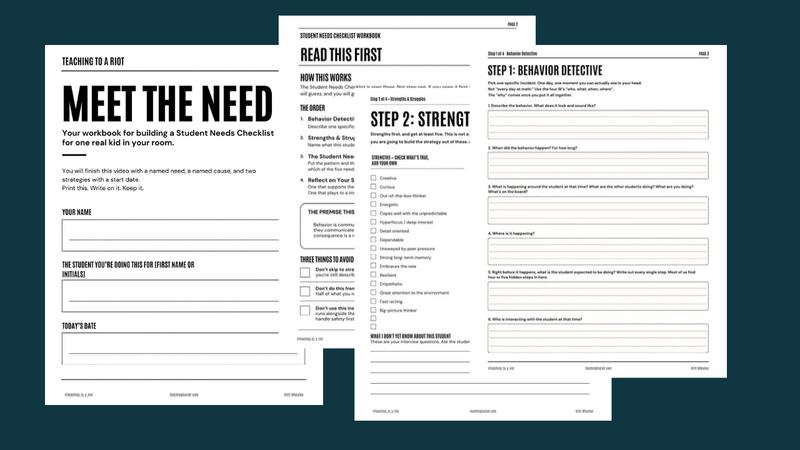
Eight printable pages you write on. You fill it in during the video, and I build in the time. You finish the workshop holding a completed plan, not a list of things to do later.
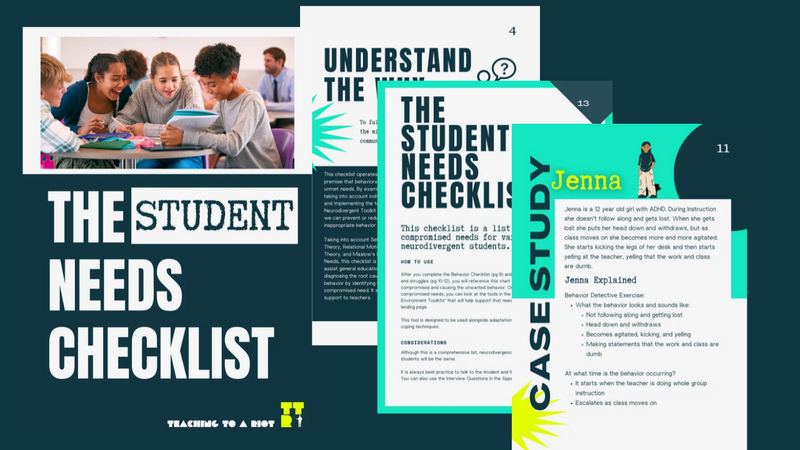
The reference copy. All five needs and the situations that commonly compromise them. It arrives the next day, so you watch the workshop first.
Fill out the workbook once, for one kid. Keep the checklist for every kid after that.
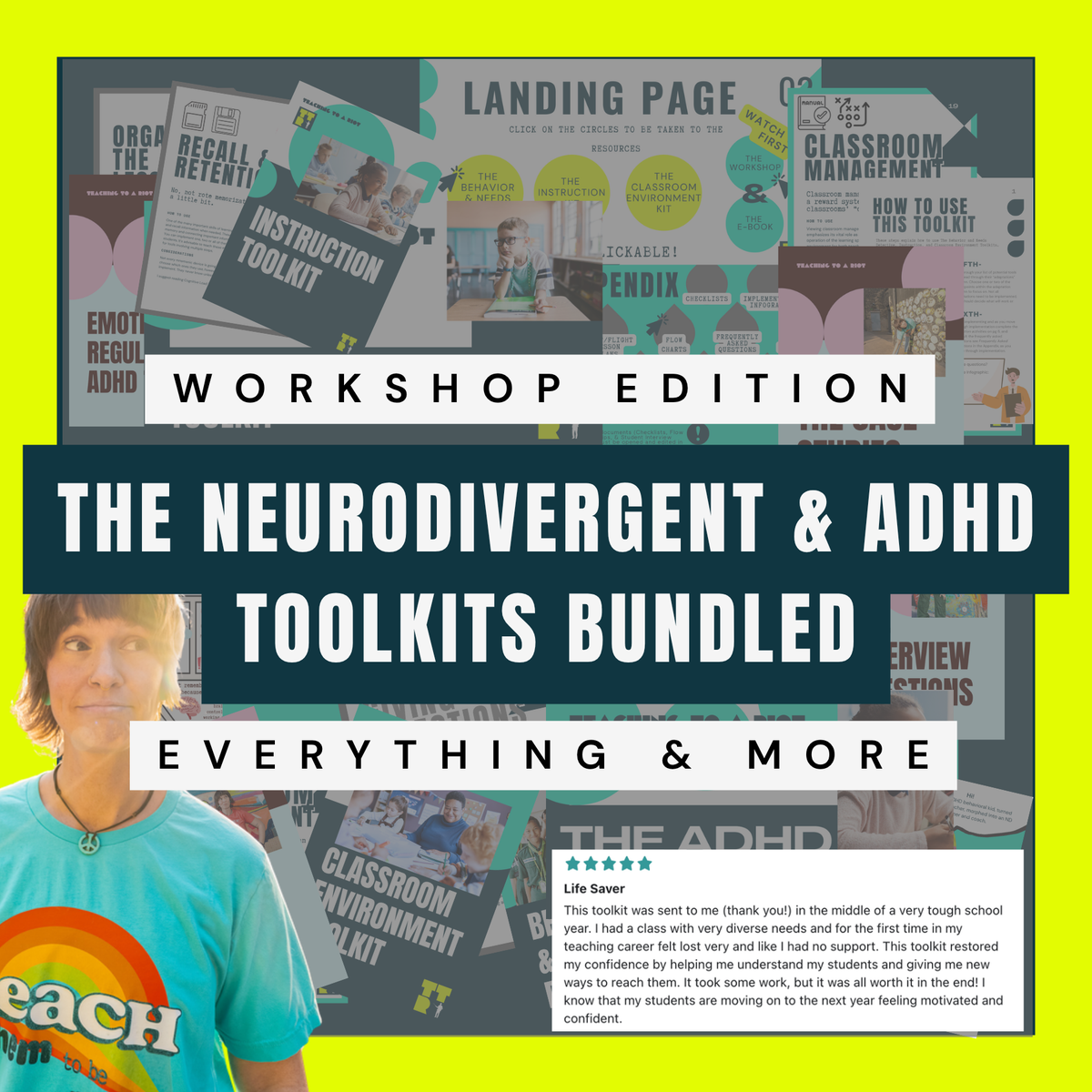
The workshop helps you find the need behind a student's behavior. The Bundle, Workshop Special Edition gives you the strategies to meet it:
At the end of the workshop, I'll give you a code for The Bundle, Workshop Special Edition. The Workshop Special Edition is only available to people who watch and complete the Student Needs Workshop. It is a special Easter egg thank-you to everyone who is committed to doing the work.

Hi, I'm Britt. I am an AUDHD behavioral kid, turned behavioral teacher, turned neurodivergent trainer and coach. Seventeen years in K-12, thirteen of them in specialized programs.
I built this checklist because I was the kid it is written about. I was the one who took it out on my teachers until they sent me home. Nobody ever asked what need I was missing. They asked what was wrong with me.
Yes. The workshop, the workbook, and the checklist all come to your inbox for nothing.
About an hour. Part of that hour is you writing while a timer runs on screen. It is built to be done in one sitting.
The workshop and the workbook arrive right away. The Student Needs Checklist arrives the next day, so you watch the workshop first.
No, but do it if you can. Writing by hand works better than typing for this, and you will want it next to you while the video plays.
You do. It is the kid you were still thinking about on the drive home. The one you plan your whole day around. The one whose name came into your head while you were reading this page. If you really are between students right now, pick a past student whose behavior you never figured out. The process is the same, and you will already know it when your next tough student shows up.
No. The workshop and the workbook stand on their own. The Bundle is where the 200 strategies live, and I tell you about it at the end. You can finish the whole process without it.
Yes. Paraprofessionals, interventionists, social workers, administrators, and parents all use this. Anywhere you are trying to figure out why a kid is doing what they are doing, the process is the same.
No. It runs alongside those. If a student is causing harm to themselves or someone else, you handle safety first and you do this afterward.
About an hour from now you could have an actual answer about the kid who has been costing you your peace and your sleep.
Neurodivergent students aren't broken. The system is. Let's change that.

I write about neurodivergent students, behavior, and what to do about it in a real classroom. Each post helps you learn why a behavior is happening. Read as much as you want. You do not need to give me your email to read it.
Read the blog